Search Sue's Blog

Sunday, 28 August 2022

Review: GERALD PHILEY'S EURO-DIARY by Brendan James


"Could there be a world of interest and adventure beyond the Midlands?  A world of confidence, sex and excitement?  A better life - a better me?"

These are the questions Gerard Philey grapples with over New Year, 1995. Sitting in his rented Black Country room, reflecting on his thankless teaching job and miserable love life, he courageously decides to abandon his humdrum existence and embark on a quest for Euro-fulfilment, fun and fitness on the Continent.

After a shaky start in Brussels, events manoeuvre him to Amsterdam where chance encounters shift his world well and truly into fifth gear. He samples the trials and tribulations of new relationships, alongside managing a sex shop in the city’s Red Light Area – on top of the challenges of fat-free living and international travel!

Through his bittersweet diary, we see how Gerard steers a laugh-out-loud course through farcical episodes and fanciful characters...and how entanglements from past and present draw him unwittingly into a criminal underworld where events ultimately take their toll.


It has been a pleasure to read and review this light-hearted page-turner, in which a stuck-in-a-rut schoolteacher makes a snap decision to leave his life of drudgery in the Midlands and take full advantage of the new-found freedoms offered by the Maastricht Treaty.  He sets off on a new adventure which takes him to a new and exciting life in the buzzing heart of Amsterdam.

It's difficult to say too much about this highly enjoyable book without giving away the plot.  But suffice it to say that the author brings the Dutch capital vividly to life through the eyes of the hapless and naïf protagonist, who comes across as a lovable adult version of Adrian Mole.

The book gives a lovely insight into life in Amsterdam in the mid-1990s - and is a poignant and bitter-sweet reminder of what was subsequently stolen from the British people by the disaster that is Brexit.


Purchase Link -  https://amzn.to/3spEKZ9


MORE ABOUT THE AUTHOR:


Brendan James is the author of the new comedy novel Gerard Philey’s Euro-Diary: Quest for a Life. Though this is his first novel, he has a large number of non-fiction publications (under the name Brendan Bartram) as a former university lecturer and researcher. A passionate linguist and Europhile, he spent a number of years working in the Netherlands, France and Germany. He lives in the West Midlands with his husband.

Social Media Links – 

Goodreads - https://www.goodreads.com/author/show/450811.Brendan_James

LinkedIn - https://www.linkedin.com/in/brendan-james-4343a8237/

Twitter - @Brendan23015569


Huge thanks to Rachel's Random Resources for the opportunity to take part in this blog tour.  Do check out the other posts (details below).


Tuesday, 23 August 2022

KINDRED SPIRITS: REGAL RETRIBUTION - a guest post by Jennifer C Wilson

Today I'm delighted to welcome back my friend and fellow-author Jennifer C Wilson, whose latest novel in the acclaimed Kindred Spirits series was released a couple of weeks ago.  I had the pleasure of working with Jen as editor of this book (not that it needed very much editing), and believe me, it's an absolute cracker.


Here, Jen shares a key scene from the novel:

Across London, ghosts are being targeted, haunted – not an easy thing to reconcile, being a spirit. Because spirits can be faded: forcibly moved on to, frankly, nobody knows where. And nobody wants to find out. Here, what starts as a perfectly pleasant day in the Tower of London suddenly turns sour for Katherine Howard. 


Chapter Twenty-Four

With so many incidents happening around the capital, the soldiers who haunted the city’s palaces, stately homes and other residences had been pressed into guard duty more than ever. They had always taken a security role of sorts, keeping an eye on the monarchs who inhabited their mini-realms, but with attacks increasing in frequency, most had upped their game even before they were asked. 

Now, every building of historical significance had a guard either permanently positioned outside, or had a rota of regular patrols keeping watch. The majority of their efforts still centred around the queens, together with others who had a strong link to Henry VIII, but nobody wanted to take a risk. The ghosts’ council of Westminster Abbey had taken a lead role in the main coordination, with Richard [III] and the Georges [Boleyn and Clarence] taking charge in the Tower, refusing to give anyone else power in what they saw as their domain. Nobody bothered to challenge them, in view of the mood Boleyn and Clarence had been in since word of Henry’s activities had got out. 

The pair had been so determined not to be blamed for either the main attacks, or any of the copycat efforts, that neither Boleyn nor Clarence had taken part in a single haunting for weeks. Not even their usual ‘rising from the fake barrel of malmsey’ trick had been spotted, by the living or the dead. Frankly, the spirits of the Tower were finding the new, serious attitude of their usually jovial neighbours almost as disturbing as the ghost-on-ghost hauntings. 

“Please, brother, Clarence, it’s been weeks, we are all glum; we urgently need some cheer in our lives.” Anne [Boleyn] begged Boleyn and his partner-in-crime to do something, anything, to entertain her, as the trio stood at the top of the White Tower looking down on their home. They weren’t officially keeping watch, but more often than not the days would find at least two spirits up on the rooftop, keeping a vague eye on what was happening below. It wasn’t perfect by any means, but if anything happened in the Tower’s confines, it was one of the better spots to be amongst the first to hear of it. 

As it happened, they got a much closer view of things than they’d anticipated.  Katherine Howard practically bounced out of the entrance to the roof, a smile on her face and a spring in her step. 

“Morning! Isn’t it a lovely day!” she exclaimed, moving over to join them at the balustrade. 

“You’re in a good mood,” Boleyn said, knocking his shoulder against hers. 

“I am indeed. The sun is shining, there’s a steel band setting up out on the riverside, and even Richard smiled at me earlier.”

“Richard smiled? A positive change for sure,” said Clarence, leaning over the edge. “Where is he?” 

Only Anne narrowed her eyes. “I wonder what’s put him in a good mood. He’d have told us, surely?”

“Oh, sister, are you jealous for not knowing our mighty leader’s inner thoughts first?” joked Boleyn, sticking his tongue between his teeth and wiggling his eyebrows at her.

Anne opened her mouth to reply, but Katherine’s cry froze the words on her tongue. 

“Clarence! Stop it!”

Three pairs of eyes were suddenly focused on the young former queen – including, Anne noticed, Clarence’s. He was nowhere near close enough to have been doing anything to her cousin. 

“Katherine?” Anne looked around the rooftop, still seemingly empty other than the four of them. “Katherine, what is it?”

“Th-there was a hand on my neck. I swear there was,” Katherine replied, looking around wildly, her eyes wide with terror. “No!” she shrieked, batting away an invisible attacker. “No, please, leave me alone!”

To their credit, in a heartbeat, both Georges reached for where their swords would have been, moving forward in unison to try and help their friend and cousin. They were halted only for a moment by Anne putting her hands out in front of them. 

“Wait, how can you attack what we cannot even see?”

“We have to try,” called Boleyn, as he rushed to Katherine’s side, trying to move his own body in between her and the direction the attack appeared to be coming from. Clarence appeared to take the hint and covered her other side, the two men effectively forming a human cage around Katherine. 

It worked for a moment, until a flash of green materialised, at knee-height, and barrelled at the small group. The Georges were steady enough on their feet to remain standing, but Katherine, unnerved and anxious, stumbled backwards out of the protective ring and fell hard against the floor, unable to prevent herself vanishing through into the space below. 

“Katherine!” cried Anne, following downward in a more controlled manner, hoping whoever was attacking would remain on the roof, distracted by the Georges. 

No such luck. 

Distracted by the fall, and still in a state of shock, Katherine had slipped into full visibility for a moment. This also made her fully tangible – which put her at risk. 

Too late, Anne saw the great bulk of their ex-husband at Katherine’s side, knife drawn. There was a flash of silver, followed by two screams, then he was gone as quickly as he’d appeared. 

It took a moment for Anne to realise one of the screams had been her own. She dashed to her cousin’s side, pulling her into a tight hug as the younger woman simply stared down at her hand. 

“Kat, Kat, come on, you have to vanish. Now, before somebody comes. Katherine!”

The use of her full name seemed to pull Katherine back into herself, and in a moment, both women were once again visible only to other spirits. Or at least, most of them were. 

“My hand… Look at my hand,” whispered Katherine, her voice shaking with fear. 

Anne looked down. To her horror, Katherine’s hand was flickering, the pattern of her gown visible as it flashed briefly into transparency. 

Katherine was fading. 


MORE ABOUT THE BOOK:

Kindred Spirits: Regal Retribution

A visit to London’s West End sends an already angry ghost into a fury, vowing revenge on those he believes have wronged him in life (and in death). 

Soon, the attacks begin – across the city and beyond – revealing that rarest of beings: haunted ghosts!

When a pattern starts to emerge, a council is established to formulate a plan, but can they work out who is behind the hauntings? As the severity escalates, can the combined force stop the avenging spirit, before the worst happens?

Bringing together the ghostly communities of the Tower of London, Westminster Abbey and other places, discover friendships and feuding in the race to retaliation…

Purchase Links 

US – https://www.amazon.com/dp/B0B3238S5Y/

UK – https://www.amazon.co.uk/dp/B0B3238S5Y/


MORE ABOUT JEN:


Jennifer has been stalking dead monarchs since she was a child. It started with Mary, Queen of Scots, then moved onto Richard III. At least now it results in a story!

She won North Tyneside Libraries' Story Tyne short story competition in 2014 (no dead monarchs, but still not a cheerful read), and has been filling notebooks and hard-drives ever since. Her Kindred Spirits series, following the 'lives' of some very interesting ghostly communities, is published by Darkstroke, and her historical romances by Ocelot Press.

Jennifer is currently exploring some new ideas for historical romance, and hoping to visit Kindred Spirit friends old and new, north of the border...

Social Media Links – 

Twitter: https://twitter.com/inkjunkie1984

Facebook: https://www.facebook.com/jennifercwilsonwriter

Instagram: https://www.instagram.com/jennifercwilsonwriter/

Blog: https://jennifercwilsonwriter.wordpress.com/

Amazon: https://www.amazon.co.uk/Jennifer-C-Wilson/e/B018UBP1ZO/


Huge thanks to Rachel's Random Resources for the opportunity to take part in this blog tour.  
Do check out the other stops on the tour - details below.


Friday, 29 July 2022

A MAN IN PIECES - an interview with Henry Corrigan

Today I'm delighted to welcome my fellow-author Henry Corrigan, whose novel A Man in Pieces is published today by Darkstroke Books.


Welcome, Henry!


What was the first thing you wrote?


The first thing I can remember writing is a Voltron comic book. I was, and still am, a huge Voltron fan and while I can’t remember how old I was, I can remember that trying to draw and write at the same time was really hard, especially when it came to squeezing what I’m sure was pithy dialogue into all those word bubbles. 😊


Can you summarize your latest work in just a few words?


Just a few words? Oh, good God, no. How about a blurb? Does a blurb work? A blurb will work. 😊


Driven by bad choices and worse options, a desperate father-to-be must battle his abusive boss for the last slot at a dead-end job, but the fight may lead one of them to murder.


What was the inspiration for this book?


My nightmares. I was having nightmares every other day about what some would consider to be very mundane things. Paying the bills, letting people down, dealing with a hellish job and worse co-workers, dreading something bad happening to the people I loved. I started writing the book as a way to get the nightmares out, and it wasn’t until I finished that I realised I had a story that would resonate with a lot of people. Just because something is mundane doesn’t mean it’s not malevolent. That’s the very definition of the banality of evil. 


Did you do any research for the book? 


Most of my research was confined to one character, my deeply-closeted, self-hating antagonist Tom. He’s a veteran, and while I grew up around veterans (my father, grandfather and step-father), and even worked with veterans for ten years, I had no actual experience of the military. (I’m a hundred-and-sixty-pound nerd with terrible eyesight. It would’ve been a poor military that accepted me.) So I did some research in regard to military bases and certain time periods so as to make things as accurate as possible. Any inconsistencies readers may find are the fault of the research, not the author. 😊


What does a typical writing day involve for you?


Late nights and early mornings. I have a hellish day job and a lovely wife and daughter I’d actually like to see, so in those moments when I’m not too tired, I write in little speed bursts. 15-20 minute stretches where I get something down, no matter how choppy it might be. 


How do you decide on the names for your characters?


I had the names of a number of my characters in mind from the very beginning, especially Claire, Mike and Tom. I’d wanted names that were short, sharp, and powerful: names that might be banal on the surface but would hit over time. 


Do you plot your novels in advance, or allow them to develop as you write?


I tell everybody that I always know how a story begins and how it ends and it’s always when I get to the middle that things go wrong. Uncovering the details of the story always ends up determining where the story will go. So it’s kind of like what they say in the military: A plan always holds up until it encounters the enemy. 


Which writers have influenced your own writing?


Stephen King most definitely, though RL Stine started me off; I’ve got dozens of Goosebumps books at home. Anne Rice taught me how to draw people into a world. Kurt Vonnegut taught me to make people laugh, even if you’ve got to make them cry first. 


What has been the best part of the writing process…and the worst?


The best part of the process is a toss-up between the actual writing, having a story come together in ways that surprise you, and getting to know readers and other authors. Having others tell you they love what you create is such an awesome feeling, I can’t properly express it in words. 


The worst part of the process is definitely the silence. It took a couple of years to write the book and then another seven years pitching it, and the worst part wasn’t being told No, but hearing nothing at all. After a while, I began to feel like the proverbial tree that fell in the forest. Regardless of whether I made a sound or not, nobody cared. 


Now the book is published and ‘out there’ how do you feel?


Better. Still anxious, I mean, I want to make a career out of this after all, but better. Knowing the book is out there, seeing the presale figures, knowing that someone has an interest in it is a huge deal for me, and I will probably cry the day I hold my book in my hands. 


Is there a message for the reader?


My book is bleak. Full stop. I’m not going to sugarcoat this, because bleak was what I was going for. My fears of What if the worst should happen? were what was keeping me up at night, so I wanted to showcase the worst. To give it life and let it breathe. But despite how dark things get, I want the reader to know that it is possible to turn away from our own worst selves. In fact, being able to do that is often the only thing that saves us. 


Do you have any advice for new writers?


Get used to silence, but keep pushing. By and large, the writing community is a wonderful place, full of people looking to support you and connect with your work. They will praise you, push you and challenge you, and while that might not always be comfortable, it can still help you get to where you need to go. 


What can we expect from you in the future?


A lot, God willing. 😊 I’m actually at work on the first book in a new sci-fi series, I’ve got a new horror novella I’m editing and a couple of children’s books I’m hoping to shop around in the near future. 


Good luck with those, Henry, and thank you for being my guest today! 


MORE ABOUT HENRY:


Henry Corrigan is a bisexual, omnivore author, poet and playwright who writes every kind of story. Whether it’s horror or science fiction, erotica or poetry, high fantasy or children’s books, he writes it all because every story matters to him. They’re what keeps him going. Always an avid reader, Henry started writing poetry in middle school but it wasn’t until he started writing erotica in high school that he really learned the mechanics of writing. What started out as private stories and love letters, soon became publications in anthologies.

To date, he has the rough drafts of two science fiction books, one horror novella, one play, four children’s books, numerous poems and several song lyrics waiting in the wings. Above all, he wants to be known for not staying where he’s been put. To always surprise people, especially himself. Because that’s what makes it fun. The feeling that even he doesn’t know what he’s going to do next.


MORE ABOUT THE BOOK:

Driven by bad choices and worse options, a desperate father-to-be must battle his abusive boss for the last slot at a dead-end job, but the fight may lead one of them to murder.

Mike Harper would like nothing more than to burn his dead-end job to the ground. But with a wife on bed-rest and a son on the way, discovering that the company is downsizing couldn’t come at a worse time.  Now, struggling to stay afloat, Mike is forced to fight for the last remaining spot to secure his family’s future. It’s too bad that Tom, his obnoxious boss, is in the same boat.

Tom Downes is a man with few friends and even fewer prospects, but the aging veteran has never gone down without a fight. Now, with his health failing and his marriage falling apart, Tom is willing to do whatever it takes to keep his job.

With a blinding snowstorm closing in, these two desperate men will battle each other on a long and twisted road fraught with heartbreaking losses – and murder.

For when it comes to staying afloat, the American Dream can break anyone…
 
Sales Link:
 
https://www.amazon.com/dp/B0B1VXBZT3
 
Social Media Links:
 
Follow me on Twitter: https://twitter.com/HenryCorrigan
Amazon:https://www.amazon.com/HenryCorrigan/e/B09QLF8CCJ
Check out my latest articles on Medium: https://medium.com/@HenryCorrigan
Friend me on Facebook: https://www.facebook.com/henry.corrigan.35
Subscribe to my website: https://henry-corrigan-y0m6k8.mailerpage.com/
Blog: henrycorrigan.blogspot.com
 

Saturday, 30 April 2022

BEFORE BELTANE - a guest post by Nancy Jardine


Hello, Sue.  Thank you for inviting me here today to share a little about Before Beltane, a prequel to my highly-acclaimed Celtic Fervour series.  Before Beltane officially launched on 29 April 2022 with Ocelot Press, and is available in e-book and paperback formats from Amazon.  The paperback can also be ordered from bookshops, and is available for library ordering on request.


The idea of writing a Prequel to the series spawned from review comments for The Beltane Choice, Book 1 of the series. Some reviewers indicated that they loved the explosive interaction of Lorcan of Garrigill and Nara of Tarras, but would have liked a bit more about their individual backgrounds prior to their meeting each other in Book 1. Other reviewers noted that The Beltane Choice doesn’t quite have the same historical background details as the other four novels in the series, and that they’d have liked to learn a bit more about the background history of northern Britain in AD 71.
Those comments made me embark upon the writing of a Prequel. At times during the writing process, I was unsure if I should be publishing two short novellas - one about Lorcan and another for Nara. However, I felt that two Prequels to the series might be confusing.
Before Beltane is a book of two halves. The reader learns about Lorcan’s life in the early months of AD 71. The time frame is the same for Nara’s story. When formatting Before Beltane, I decided to intermingle the two stories so – although Lorcan and Nara have no direct interaction with each other – the reader experiences an interlude in Lorcan’s life (a chapter) followed by one for Nara. That process is repeated throughout the book. 
Before Beltane is effectively Book 0 of the series, in which the reader experiences the trials and tribulations of what Lorcan and Nara would term their daily lives, as they undertake the everyday tasks set for them … until those lives are entirely turned upside down! Lorcan’s visit to the Sacred Groves, with the Druid Maran, is terrifying, though the future prophesied for him is thrilling, confusing and heartrending. Nara’s expectations of becoming a fully-initiated priestess of the goddess Dôn are shattered when she’s summoned to the High Priestess. She is thrown out of the sacred home of the priestesses and must live at her father’s Hillfort of Tarras. The huge problem there is that her father Callan, Chief of Tarras, hates Nara and he orders her to be shunned by all at the hillfort, or they will face severe punishment. Nara must fend for herself, but fulfilling her destiny, her promise to the goddess  Dôn by the Festival of Beltane, seems so…impossible!
I thoroughly enjoyed creating a backstory for both Lorcan and Nara and hope that readers will enjoy this glimpse of them, too. It explains quite a bit about why they are the way they are at the beginning of the series in Book 1.
Blurb:
Two lives. Two stories. One future.
AD 71 Northern Britannia
At the Islet of the Priestesses, acolyte Nara greets each new day eager to heal the people at Tarras Hillfort. Weapon training is a guilty pleasure, but she is devastated when she is unexpectedly denied the final rites of an initiated priestess. A shocking new future beckons for Princess Nara of the Selgovae…
In the aftermath of civil war across Brigantia, Lorcan of Garrigill’s promotion of King Venutius is fraught with danger. Potential invasion by Roman legions from the south makes an unstable situation even worse. When Lorcan meets the Druid Maran, the future foretold for him is as enthralling as it is horrifying…
Meet Nara and Lorcan before their tumultuous meeting of each other in The Beltane Choice, Book 1 of the acclaimed Celtic Fervour Series.
Before Beltane eBook
Before Beltane paperback
Barnes & Noble
Bio:
An ex-primary teacher who published local history projects, Nancy spends her retirement writing historical and contemporary fiction. All historical time periods appeal immensely but so far Roman Britain (and a teensy bit of Victorian and Edwardian in contemporary mysteries) has won the day! She loves to interact with her readers when regularly signing/ selling paperback versions of her novels at local Craft Fairs, and at larger event venues. She enjoys presenting author talks and gives formal presentations on her novels, and on Ancient Roman Scotland, to groups large and small.
She’s a member of the Historical Novel Society; Scottish Association of Writers; Federation of Writers Scotland; Romantic Novelists Association and the Alliance of Independent Authors. She’s self-published with Ocelot Press. Current writing is historical fiction which begins in 1850s Scotland.
You can find her at these places:

Monday, 28 March 2022

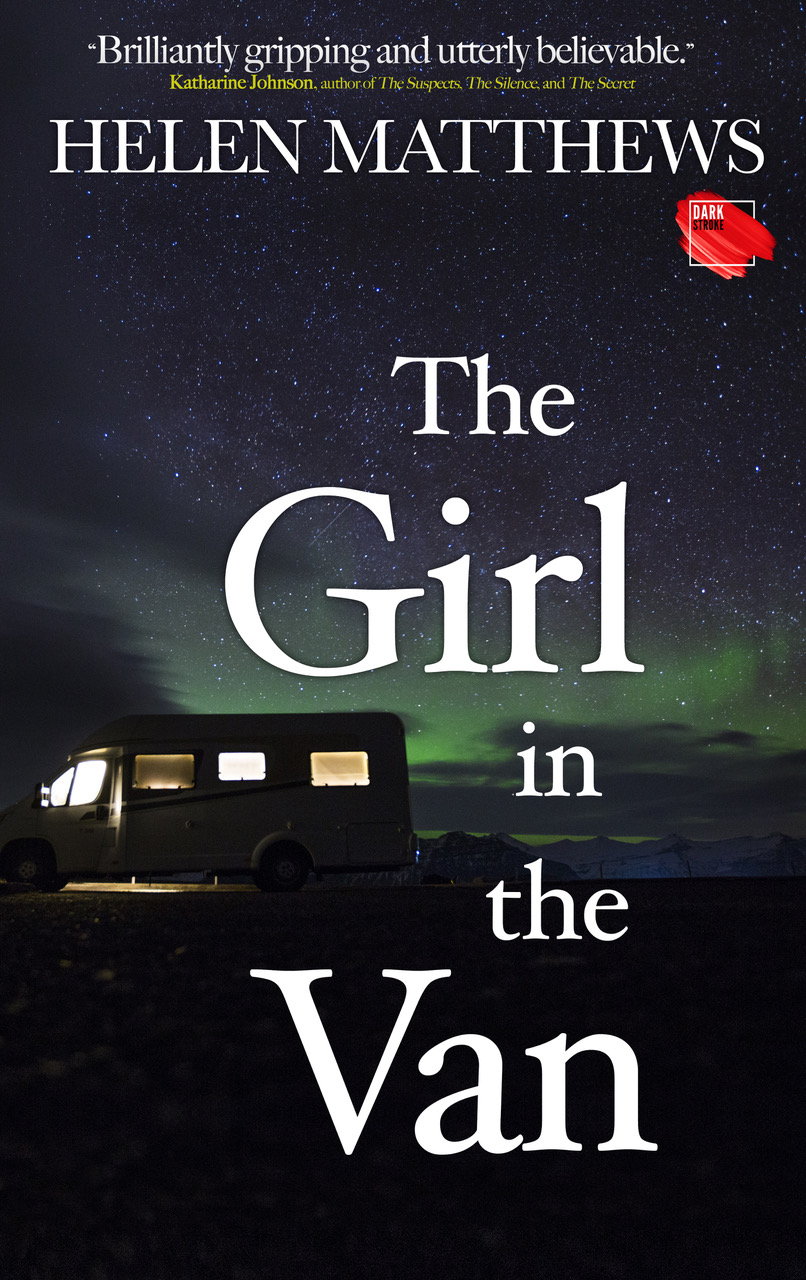
THE GIRL IN THE VAN - an interview with Helen Matthews

I'm delighted to welcome the lovely Helen Matthews back to my blog.  Helen was here a little over a week ago talking about modern slavery (you can read that piece here), but today she's back to tell us a little more about herself.  


What prompted you to first start writing? What was the first thing you wrote?

There’s a quote I especially like from author, Neil Gaiman. Apparently, someone asked him:  I want to be an author when I grow up, am I insane?

To which Gaiman is reported to have replied:  Growing up is highly over-rated. Just be an author.

I’m someone who has achieved my author dream after serving a ridiculously long apprenticeship. Many of us say we’ve been writing from the moment we picked up a pen, and I’m one of them. In childhood, I had some successes in competitions and fillers published in teen magazines. Then I went on to study English at university and was a bit overwhelmed by reading the works of great literary masters. In the early days of my business career, I wrote late at night with a glass of wine by my side, mainly short stories that were judged ‘too dark for our readers’ by the magazine editors I submitted to.

As the family’s main breadwinner, after my children were born I continued working full-time in a career that used the analytical side of my brain. I noticed my writing was deteriorating – impacted by turgid quasi-legal and financial business speak I had to use in reports and documents. The creative spark left me. Writing fiction was hard, so I began dabbling in freelance journalism and had some articles published in family and lifestyle magazines. Ironically, in the late 1990s and early 2000s before the internet expected content for free, even hobbyists like me were well-paid, typically £70-£200 and once as much as £1,000. My highlight was pieces published in The Guardian and broadcast on BBC Radio (in a programme called Home Truths presented by the late and lovely John Peel).

During those wilderness years, I wrote a couple of deeply-flawed novels and put them in a drawer. Finally, when my children were heading for university, I decided I’d never be happy if I stayed on the treadmill of my well-paid career. I fled corporate life, putting our family finances at risk, and went back to university to do an MA in Creative Writing. You absolutely don’t have to do an MA, or any qualification, to become a novelist. I did it because I needed to make a break from the business world and rediscover my creativity. For my dissertation, I wrote another novel. It can’t have been too terrible because I did pass my MA, but I knew it wasn’t good enough so it went into the drawer with the others.

 My breakthrough novel was After Leaving the Village. The opening pages won first prize at Winchester Writers’ Festival and I spent two years querying. Five agents requested the full manuscript; many gave positive, personalised feedback but didn’t make an offer. In the end I signed a deal with a small indie publisher and the book came out in 2017.

It’s been a long journey to becoming a published author, but I’m sure Neil Gaiman would be pleased to hear I still haven’t grown up.


Can you summarise your latest work in just a few words?

The strapline does quite a good job: A tormented mother, an abandoned girl, a deadly game of survival.

One of the problems with writing suspense is trying to entice the right readers in without giving too much away.


What was the inspiration for this book?

Inspiration for each novel comes in different ways. It could be a snatch of overheard conversation, an incident that happened to someone else or a random ‘what if?’ idea. For this book, the inspiration arrived in visual form. I had an image of a frightened girl, who turned into Miriana, hiding in the back of a campervan. The mental picture was so vivid if felt as if she’d tapped me on the arm and asked me to tell her story. Immediately I wanted to know what that story was. Why was she hiding? What had happened to her? And how was this stranger linked to the central character, Laura.


What’s your writing process? Did you do any research for the book?

Authors are often asked, ‘Are you a plotter or a pantser?’  Due to my long years in management, my planning skills are over-developed so I’m about seventy percent plotter; twenty per cent pantser, and the other ten per cent is just generally confused.

My starting point for a novel is a broad plot outline and some ideas about my main characters. I do some initial research, then write a few chapters to test out whether the characters will live and breathe on the page. Not all stories have legs and some plots fizzle out. Once I’m confident an idea will work, I get stuck into more extensive research. For The Girl in the Van, I had to research, among other things, an aspect of modern slavery known as ‘county lines’ where young people are lured by criminal gangs into transporting drugs from cities into rural areas. I’m an ambassador for the anti-slavery charity Unseen so I’m lucky to have access to their materials and resources. I can also ask my contacts questions about anything I’m not sure of. There’s quite a bit of police involvement in this book, and for that I used the services of Graham Bartlett, a former senior police officer who offers a consultancy service to authors.

As I’m originally from Wales and many scenes in the book are set in Cardiff, Penarth, and Tenby, this was a great excuse to return to some fabulous places to research the book and take photos to illustrate future blogs.


What does a typical writing day involve for you?

Alongside writing fiction, I’m an occasional freelance copywriter though I’m turning down most commissions just now – mainly because the agencies and contacts I work with want me to do project management as well as the writing and this sucks up too much time. Self-employment is a joy. If you meet deadlines, you can work whenever and wherever you please. Unless I have a conference call or Zoom meeting, I set my alarm for a very civilised 8.15 am. My lovely husband, an early riser, brings me a cup of tea. If he forgets, I might send him a WhatsApp message: Tea, please. I once sent the Tea, please message, in error, to my daughter’s partner – presumably, the last person I’d messaged the night before. This caused some consternation as they live half an hour’s drive away and the tea would have been cold before it reached me.

Enough confessions. You probably think I’m slothful, but this working-from-home life became the norm for many of us in lockdown. I shovel down a bowl of cereal and I can be at my computer soon after nine.

I wish I could devote my whole working day to novel writing but the demands of social media, writing newsletter and blog content and searching out new promotional opportunities take time. I do talks for book clubs and women’s groups, and occasional library or literary festival events. All of these I really enjoy but they need planning. For example, yesterday I spent the morning with an author I’m due to interview at a local literary festival soon. We met over coffee in an indie bookshop, worked out the structure of the event, brainstormed the questions, answers and the messages she wants to give. I still need to write up the interview brief and we’ll discuss it again. All this preparation work is for a one-hour event.

Once I’ve cleared the business end of my inbox, I’m back to work on my novel-in-progress. Late morning, I take Homer, our rescue dog out for a short walk then have a fifteen-minute lunch break. I write through the afternoon with Homer snoozing at my feet. Around four, he’ll start pestering me for another walk and we’ll go for a long one. I’m trying to average three miles a day to get a proper break from the keyboard.

In the evenings I’m often out. I belong to two book clubs and a choir. I meet friends or family for a film or a meal. If I’m in, I might carry on writing until 10 pm then watch the News and maybe a film or read and do a Sudoku or Wordle. I’m rarely in bed before twelve-thirty.

Writing can be solitary, but I take days off when I need to. You can never spend too much time with fellow writers. I belong to three critique groups. I call them my Hotel California – you can go there, but you can never leave.


Which writers have influenced your own writing?

Two authors at the literary end of my psychological suspense genre, who I hugely admire are Louise Doughty (Platform Seven and Appletree Yard) and Emma Donoghue (Room). I would love to write like them, but my books aren’t written with literary prizes in mind. I’m targeting high-end commercial/book club crossover, and I think I’ve got this right as one book club has already hosted me twice and has already invited me back in June to talk about The Girl in the Van. The invitation came in as soon as they saw the cover reveal for the book, and I was so surprised I asked the organiser:  Are you sure they really want to hear me again?

In psychological suspense and thrillers, I enjoy Lisa Jewell (The Family Upstairs) Gillian McAllister (How to Disappear), Clare Mackintosh (I Let You Go), Louise Candlish (Our House), Emma Curtis (That Night), and Katharine Johnson (The Suspects). The list is endless.


Does your new book have a message for the reader?

I’ve already mentioned the modern slavery ‘county lines’ theme in the book.

This is the second time I’ve written about human trafficking and I’ve become dedicated to the anti-slavery cause and raising awareness of this hideous crime. Once lured into ‘county lines’ gangs it can be very hard for victims to break free. Recent survey research shows public awareness of this crime is lower than of other forms of human trafficking and slavery. Sometimes parents don’t realise their own child is involved because they don’t spot the signs. So as well as writing a gripping page-turner, I wanted to bring the plight of these young people to wider attention.


Do you have any advice for new writers?

Find your writer tribe. Writing can be lonely, so writers’ groups – local ones that meet in person and online groups on Facebook – can give us the support we need.

You don’t have to write what you know. Draw on it, by all means, but give your imagination a free rein to be creative. Books would be very boring if we only wrote about our lives.

Read, read, read – sounds obvious, doesn’t it, especially if you’ve been a reader all your life. But I’ve been surprised to learn (from a friend who lectures on a creative writing degree course) that many of her writing students don’t read! I once heard a quote (and I’ve searched online but couldn't find who said it), something like:  

If you have the arrogance to write, have the humility to read.


Is there anything else you’d like to add?

I think the above quote about reading just about sums it up. We’re nothing without readers.


MORE ABOUT THE GIRL IN THE VAN

A tormented mother.  An abandoned girl.  A deadly game of survival.

What happened to Ellie?

Traumatised by events, Ellie's mother Laura can't bear to stay in the Welsh seaside town where she lives with her partner Gareth.  She escapes to London, breaking all ties with him and refusing to tell anyone her new address.

After two years of living alone and working in a mundane job, Laura buys an old campervan and joins a singles holiday.  Here she meets Miriana, a teenage girl who bears a chilling resemblance to Ellie.  As Laura uncovers Miriana's story, she's shocked by the parallels to her own life.

But stories can be dangerous, and someone out there will stop at nothing to prevent the truth about Ellie from coming out...


MORE ABOUT HELEN:

Helen Matthews writes page-turning psychological suspense novels and is fascinated by the darker side of human nature and how a life can change in an instant.  Her latest novel The Girl in the Van was published on 17 March 2022 by Darkstroke Books.  Previous novels include suspense thriller After Leaving the Village, which won first prize in the Opening Pages Category at Winchester Writers' Festival.  This was followed by Lies Behind the Ruin, a domestic noir set in France, published by Hashtag Press.  Her third novel Façade was published by Darkstroke Books in 2020.  

Born in Cardiff, Helen read English at the University of Liverpool and worked in international development, consultancy, human resources and pensions management.  She fled corporate life to work freelance while studying for a Creative Writing MA at Oxford Brookes University.  Her stories and flash fiction have been shortlisted and published by Flas 500, 1000K Story, Reflex Press, Artificium and Love Sunday Magazine.

She is a keen cyclist, covering long distances if there aren't any hills, sings in a choir, and once appeared on stage at Carnegie Hall, New York, in a multi-choir performance.  She loves spending time in France.  Helen is an ambassador for the charity Unseen, which works towards a world without slavery, and donates her author talk fees and a percentage of her royalties to the charity.

Find out more at: 

https://www.helenmatthewswriter.com  

https:www.twitter.com/HelenMK7 

https://www.Instagram.com/helen.matthews7 

https://facebook.com/HelenMK7Writer


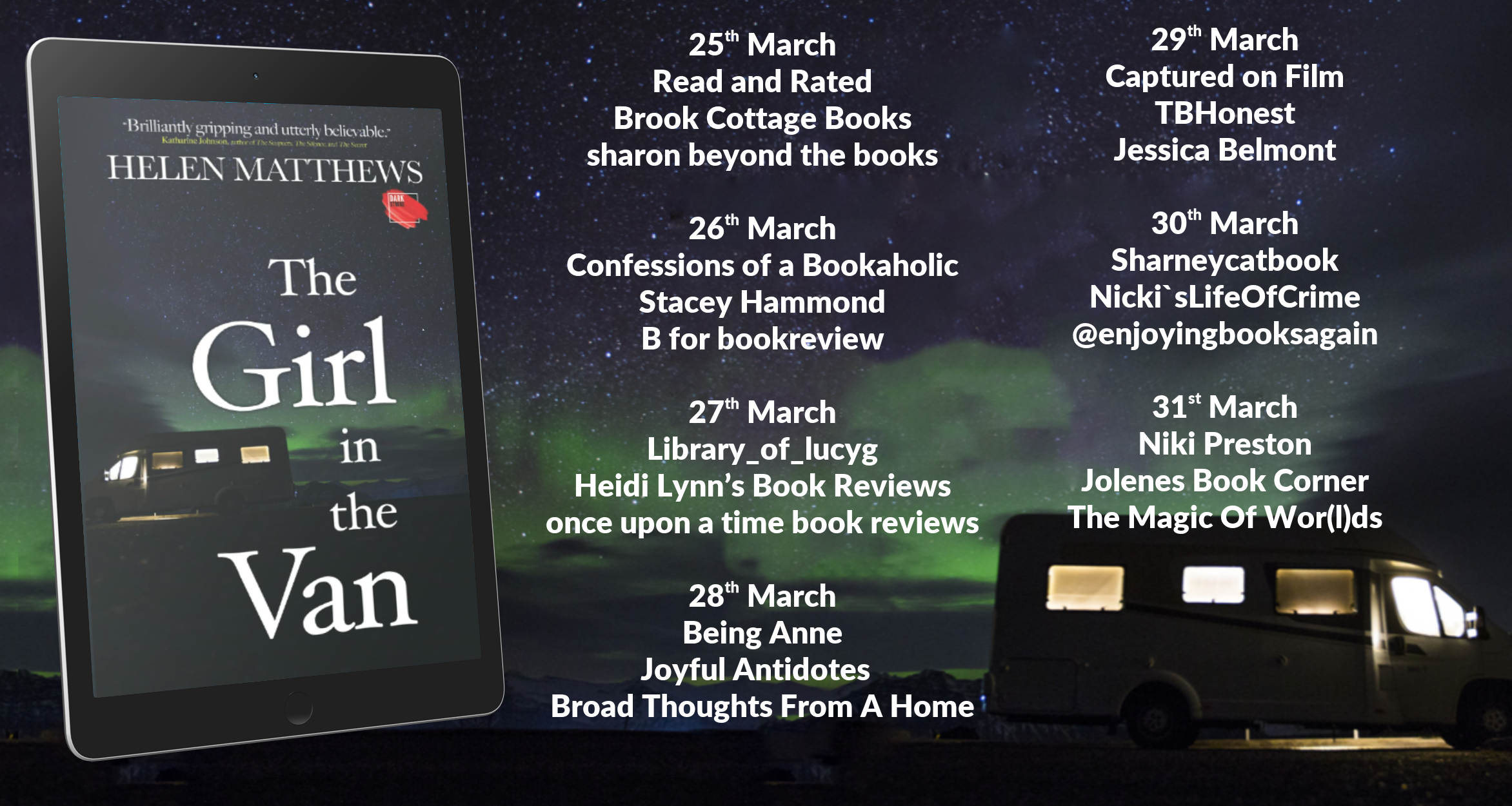
Sincere thanks to Rachel's Random Resources for the opportunity to take part in this blog tour.  Do check out the other stops!